The Story
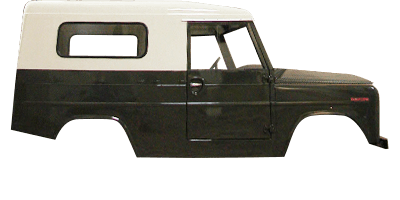
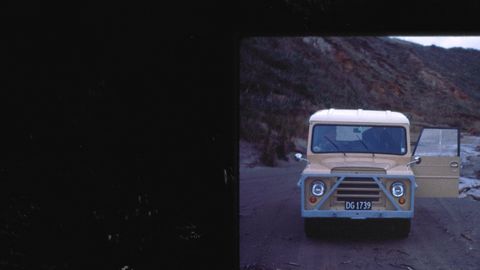
The Trekka is New Zealand's only locally-designed and mass-produced motor vehicle. Around 2,500 were built between 1966 and 1972 at the vehicle assembly plant of Motor Holdings, in Ōtāhuhu South Auckland.
History
It was the product of government policy which strictly controlled the importing of motor vehicles, and encouraged their assembly from kits to create local jobs and industry.
The concept was developed by Skoda franchise holder Phil Andrews, who negotiated with Skoda for the mechanical kits, during the Cold War era.
Once contracts were secured, Andrews sold the concept and the Skoda franchise to Motor Holdings, led by its managing director Noel Turner.
The Trekka blended a locally designed and manufactured body, with the complete mechanical kit of a Skoda Octavia station wagon, with "local content" reaching an unheard-of 70 percent.
The Trekka sold strongly due to the ready availability of other small utility vehicles, the absence of the long waiting lists that existed for popular models, and its low price.
Export plans evolved, with more than 50 sold in Australia, in returning for increased import access for Australia's Holden car.
A deal was struck with Indonesia to export Trekkas as kits for assembly near Surabaya, but after the initial shipment of 100, difficulties in being paid for the vehicles saw the deal collapse.
The Trekka worked its way into New Zealand's streetscape, both with private owners, and businesses. Five were flown to Vietnam during the war, to serve at a New Zealand-assisted civilian hospital at Quy Nhon.
The strict import controls which enabled the Trekka's production, gradually relaxed and by 1973, production ended as Japanese commercial vehicles became more readily available.
New Zealand quickly moved on from the Trekka, and most didn't survive the rigours of abandonment and rust.
In the past decade, a strong restoration culture has evolved, and an example sits in Skoda's factory museum in Mladá Boleslav in the Czech Republic, marking a small but important step in its global history.
Revival
Trekka becomes art and heads to Europe
In 2003 the Trekka became the unlikely centrepiece of a major artwork by Michael Stevenson, and represented New Zealand at the Venice Biennale, the Olympics of modern art.
Stevenson had a Trekka restored, and supported by other elements, “This is the Trekka” told the story of a nation trying to diversify its economy away from pasture, by linking up with a then communist nation to produce the ultimate symbol of industrialisation, a motor vehicle.
60,000 people passed through the La Maddelena church, to see “This is the Trekka” which sowed the seeds of awareness in Europe, and more importantly in the Czech Republic which produced Trekka’s mechanical underpinnings.
Stevenson’s work returned to New Zealand and has since been exhibited at Te Papa, the national museum, and at Wellington City Gallery.
Trekka returns to its second home
The place of the Trekka in the history of Czech car-maker Skoda became better-known to Czech classic car enthusiasts in the two decades following “This is the Trekka” in Venice in 2003.
Several restoration-grade Trekkas found their way to the Czech Republic and then in 2017 Skoda itself bought a restored Trekka for its factory museum in Mlada Boleslav.
The museum Trekka had been bought from a West Australian enthusiast, who had restored one of around 50 exported from New Zealand in the late 1960s.
Skoda itself began to use the Trekka in public relations events alongside its venture into the SUV market with the Kodiaq, pointing to its part in a fore-runner to the SUV sector, more than half a century earlier.
The Trekka shown in the Skoda video-shoot and on the road, was originally owned by Roger Taylor in Wānaka, and was faithfully restored in the Czech Republic by Jiří Valach retaining many of Roger's modifications.
About 9 Trekkas are now thought to be in private hands in the Czech Republic and Slovakia.